

The Clock Change Nobody Announced
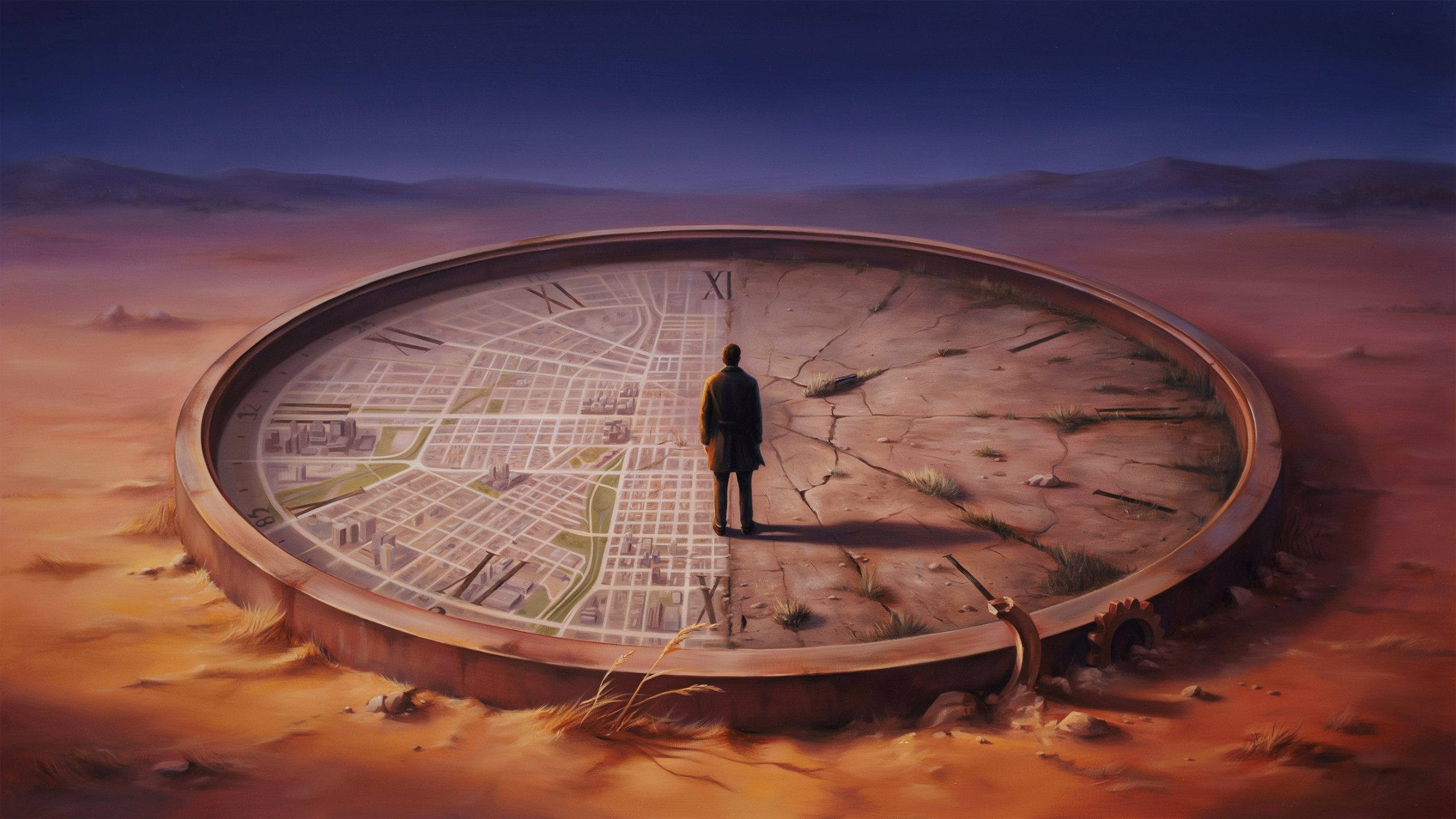
THE CONNECTING POINT (TCP) | Words: 1,290 | Reading time: 5 minutes
Twice a year, much of the world changes its clocks. And twice a year, the friction that follows is immediate, measurable, and oddly surprising, as if we forgot it was coming despite the fact that it comes every year.
The week after the spring change, car accidents rise. Heart attack rates tick up. Sleep clinics see a surge. Productivity drops in ways that don’t show up cleanly on any dashboard but accumulate across every system simultaneously.
Some countries opted out entirely—most of the world, actually. In the United States, Arizona and Hawaii don’t observe Daylight Saving Time. They didn’t try to fix the global clock. They simply stopped pretending to be on a schedule that didn’t match their reality.
What makes DST friction so persistent isn’t the one-hour shift. It’s the mismatch between systems that adjusted and systems that didn’t—the three-week gap each spring when US and European time zones temporarily drift apart, complicating every coordinated handoff across that boundary. The calendars that mishandle the 2:00 AM hour, producing meetings that either get scheduled twice or not at all. The embedded systems that require manual intervention nobody remembered to do.
The cost is real and largely invisible. Diffused across every system. Never a single line item.
Sound familiar?
The Forgiving Clock
Here’s what most workers know but rarely say out loud: they had the signal long before anything broke.
The restlessness that arrives mid-cycle. The quiet, undeniable sense that this chapter has taught them everything it has to teach. The boredom that creeps in not as dissatisfaction but as information — the system signaling that the current configuration has run its course.
The old clock was forgiving. Not because it gave you clarity about when to move — it rarely did. But because the pace was slow enough that ignoring the signal had room to self-correct.
You could feel the signal, rationalize it, file it under gratitude or stability or not yet, and still have enough runway to recover when the external event eventually forced the move. The layoff was painful. The reorg was disorienting. But you landed somewhere. You rebuilt. The curve moved, but it waited long enough that overstaying your moment was costly without being catastrophic.
I know this from the inside. I’ve missed my own inflection point more than once. Ignored the early signals. Filed the friction under something else and kept going. My natural cycle runs about two years and when I’ve overstayed it, the old clock was forgiving enough that reinvention was still possible. Costly, but survivable, the environment gave you enough runway that reinvention was still possible even when it came late. That runway has shortened.
The environment that made that forgiveness possible has changed.
What Compression Removed
There is a documented medical condition called Shift Work Sleep Disorder. It affects up to 40% of US shift workers; overnight warehouse staff, ER nurses handing off at 7am, early-morning drivers already hours into their shifts before most people pour their first cup of coffee.
The condition isn’t metaphorical. It’s diagnosable. It causes persistent insomnia, chronic fatigue, impaired concentration, and if untreated, the effects build into elevated risk of depression, cardiovascular disease, and workplace injury.
What causes it isn’t the work itself. It’s the structural mismatch between the worker’s biological clock and the schedule the environment requires.
A recent Fast Company piece put it plainly: this isn’t just a healthcare access problem. It’s a structural mismatch.
The parallel to what’s happening in professional environments right now isn’t loose. AI compression has shortened the interval between meaningful disruptions. The same mismatch that the old clock could absorb is now happening faster, with less room to recover before the next wave arrives.
The old clock gave workers something they rarely named: room. You could be out of sync with your environment and still function. The gap between your internal signal and your external response had space to close naturally.
AI compression has been steadily removing that room.
In a compressed environment, the window between signal and missed moment is narrower than the old clock ever prepared you for. The decision that felt like it could wait until things were clearer, until the role was more defined, until the timing felt
right, but that decision may have already been made by the environment while you were still calculating.
The invisible risk isn’t the move. It’s the staying.
Most workers calculate the cost of moving — the uncertainty, the exposure, the loss of stability. The cost of staying out of sync in a compressed environment rarely makes it onto that same ledger. It shows up the way DST friction does, quietly accumulating until the environment forces the accounting.
This isn’t a confidence problem. It isn’t a courage problem. It’s a clock problem. The calculation most workers are running was built for an environment that no longer exists.
Reading the Clock You’re Actually On
Arizona made a different kind of decision. It didn’t try to fix the global clock. It simply stopped pretending to be on a schedule that didn’t match its reality — and operated from that honesty instead.
That’s the move available to every worker right now — not changing the external environment, not willing yourself onto a faster cycle, not performing urgency you don’t feel. Something more specific and more durable: knowing which clock you’re actually running on before you make any calculation about risk at all.
The signal is still there. It arrives on time, every time. The restlessness, the boredom, the quiet sense that the current chapter has run its course. These aren’t noise. They’re data. What’s changed is what happens when you decide to wait.
Reading your own clock requires three honest questions.
Where am I in my cycle right now? Not where you wish you were, not where your last performance review suggested you were but where you actually are. Is the work generating energy or consuming it? Is new information expanding your thinking or recirculating through familiar channels? When did you last feel genuinely reoriented rather than just updated?
What is the gap between my rhythm and what my environment is actually requiring? This isn’t about whether you’re fast enough or ambitious enough. It’s about whether the pace at which you naturally process significant change is matched to the pace the moment is demanding. A mismatch in either
direction—too fast or too slow relative to your organization’s clock—produces friction. The question is whether you can see it clearly enough to work with it.What am I actually risking by waiting? Not the visible risk of moving—that one is easy to calculate. The invisible one. The window that closes while you’re building certainty. The forgiveness the old clock provided that the new one doesn’t.
None of these questions require a new title or a dramatic pivot. They require accurate information about which clock you’re running on and the willingness to calculate from that reality rather than the one the old clock produced.
The signal hasn’t changed. The margin for ignoring it has.
What’s Here & What’s Coming
If this is landing for you — if the gap between your internal signal and your external response has been wider than you’ve named it — the Personal Inflection Curve™ Diagnostic was built to surface exactly where you are on your clock right now.
Next week in TAIIP: what this same clock problem looks like when it scales from one worker to an entire leadership team — and why the organizational cost stays invisible until it isn’t.
